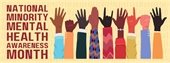
National Minority Mental Health Awareness Month
July is National Minority Mental Health Awareness Month.
It is a time to bring awareness to the unique challenges that racial and ethnic minorities in the United States face when it comes to mental illness. In 2020, fewer than one in every two African American adults got care for mental health. In 2018, Asian Americans were 60 percent less likely to receive mental health treatment than non-Hispanic Whites. Obstacles for many include a lack of health insurance, less access to treatment, and stigma.
Mental illness can affect women of all races and ethnicities. Show your support this month and beyond by learning more about mental health. You can also use and share the resources below to help spread awareness about mental health in your communities and families.
What Is Mental Health?
Mental health includes emotional, mental, and social well-being. Mental health impacts how a person thinks and feels. It also affects how you act, manage stress, and make choices. When you take care of your mental health, you are better able to cope with stress or challenges.
Sometimes it can be hard to manage your mental health. If you have noticed a change in thoughts, behaviors, or moods that disrupts your life, talk to your health care provider. You can also contact a mental health specialist or a trusted loved one for help if you have noticed these changes in yourself or in a loved one.
What Causes Mental Illness?
There is no single cause for mental illness. Multiple mental illnesses can occur at the same time and at random. They can also last for a short or long period of time.
Your mental health can change at any point. Some risk factors that can play a role in developing mental illness include:
- Use of alcohol or drugs
- Feeling lonely or isolated
- Biological factors or chemical imbalances in the brain
- Adverse childhood experiences, like child abuse or sexual assault
- Experiences tied to ongoing medical conditions, like cancer or diabetes
Symptoms of a Mental Illness
Most of the same mental illnesses can develop in both men and women. However, women may have more distinct symptoms.
Some common symptoms can include:
- Pulling away from people and usual activities
- Appetite or weight changes
- Ongoing sadness or feelings of hopelessness
- Intense changes in eating or sleeping habits
- Clear changes in mood, energy level, or appetite
Mental Illnesses Common to Women
Having a mental illness is more common than most people may think. At least one in five women in the United States has had a mental illness at some point. Those that are common in women include depression and anxiety. Postpartum depression can develop after giving birth.
Read more about mental illnesses common to women below.
Anxiety Disorders in Women
While they can happen to anyone, anxiety disorders are twice as likely to occur in women than men. Anxiety is a feeling of worry, nervousness, or fear about an event or situation. Anxiety is a normal reaction to stress and helps you cope. But when it gets hard to control and affects day-to-day life, it can be disabling. Anxiety disorders happen when extreme anxiety affects your daily activities, such as going to work or school or spending time with friends and family.
Signs of an anxiety disorder include anxious thoughts or feelings of dread. The symptoms can keep you from living as you normally would.
Depression in Women
Studies show that about 1 in 10 women in the United States reported symptoms that suggest they experienced an episode of major depression in the last year, and women are nearly twice as likely as men to have had depression. It is normal to feel sad at times. However, depression can cause people to feel sad on most days. This can affect your daily life and how you engage with your loved ones.
Certain types of depression are unique to women and can occur at different stages of a woman’s life. Pregnancy, the postpartum period, perimenopause, and the menstrual cycle are all associated with physical and hormonal changes that could impact your mental health. If you have depression and get pregnant, your depression may get worse during pregnancy.
There are many signs of depression. A few of them include feeling sad, hopeless, or tired most of the time. Speak with your health care provider if you have noticed signs of depression. You can discuss next steps and treatment options with your health care provider.
More Than Just the Baby Blues: Postpartum Depression
It is normal for some women to feel sad or have no emotion after giving birth. But if such feelings last more than two weeks, you may have postpartum depression. This can happen up to a year after giving birth. Once you give birth, your hormone levels quickly drop back to normal. The decrease can be sudden and extreme, which can lead to this condition.
Postpartum depression is not a normal part of life after giving birth. If you notice signs of this condition, speak to your health care provider. You can also call the National Maternal Mental Health Hotline. It offers free and confidential support for new mothers. Call or text the hotline at 1-833-TLC-MAMA (1-833-852-6262).
Managing Your Mental Health
Many parts of daily life can impact your mood and mental health. They can include stress, your physical health, or the regular demands of life. But you can improve your quality of life when you take charge of your mental health.
Here are a few ways to manage your mental health overall:
- Get enough sleep each night (at least 7 hours)
- Engage in healthy habits, like exercising and eating well
- Stick to a treatment plan given by your health care provider
- Find a support group and seek out your health care provider for support
Today, good mental health is achievable thanks to many forms of support. Share the resources in this blog to spread awareness of the importance of good mental health and to help ensure that everyone has equal access to the mental health resources they need. You can also use the blog as a source to find tools to help you manage your mental health. Together, we can all do our part to support better mental health for ourselves and others.
https://www.fda.gov/consumers/knowledge-and-news-women-owh-blog/national-minority-mental-health-awareness-month
Published 7/2024 Accessed 7/6/2026




 Share on Facebook
 Share on Twitter
 Share via Email
